


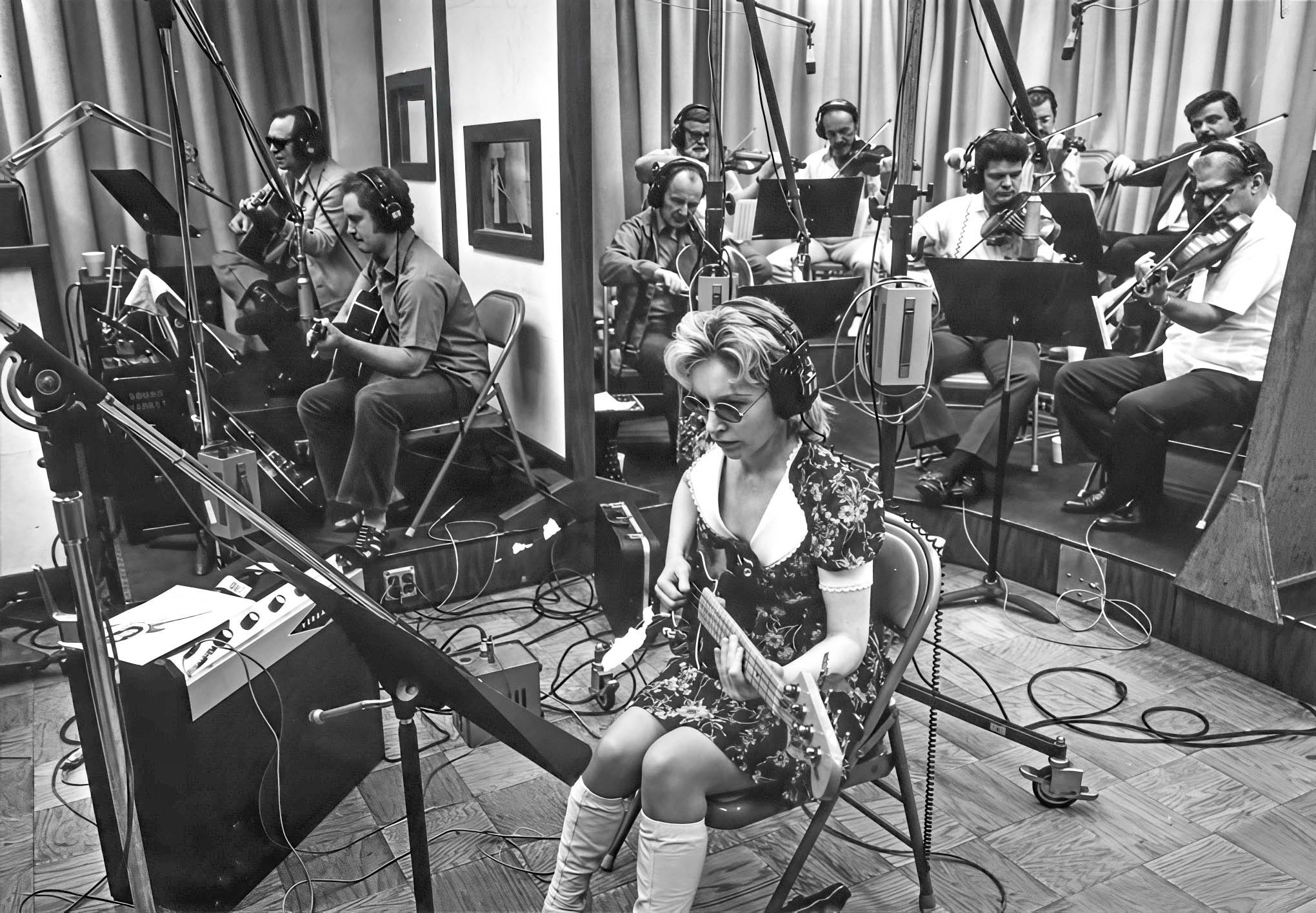
(Carol Kaye)
There’s a certain poetry in the invisible—those who shape the sound yet rarely stand in its light. In the early 1960s, as pop music found its pulse on the West Coast, a loose collective of Los Angeles studio musicians quietly became the engine behind an astonishing run of hits. They weren’t a band in the traditional sense—no fixed lineup, no marquee billing—but their fingerprints are everywhere. They would later be called The Wrecking Crew.
Anchored by players like drummer Hal Blaine, guitarist Tommy Tedesco, bassist Carol Kaye, and keyboardists such as Leon Russell, these musicians brought precision, instinct, and a kind of fearless adaptability to every session. Producers like Phil Spector and artists including Brian Wilson relied on them not just to play parts, but to shape the very architecture of the music.
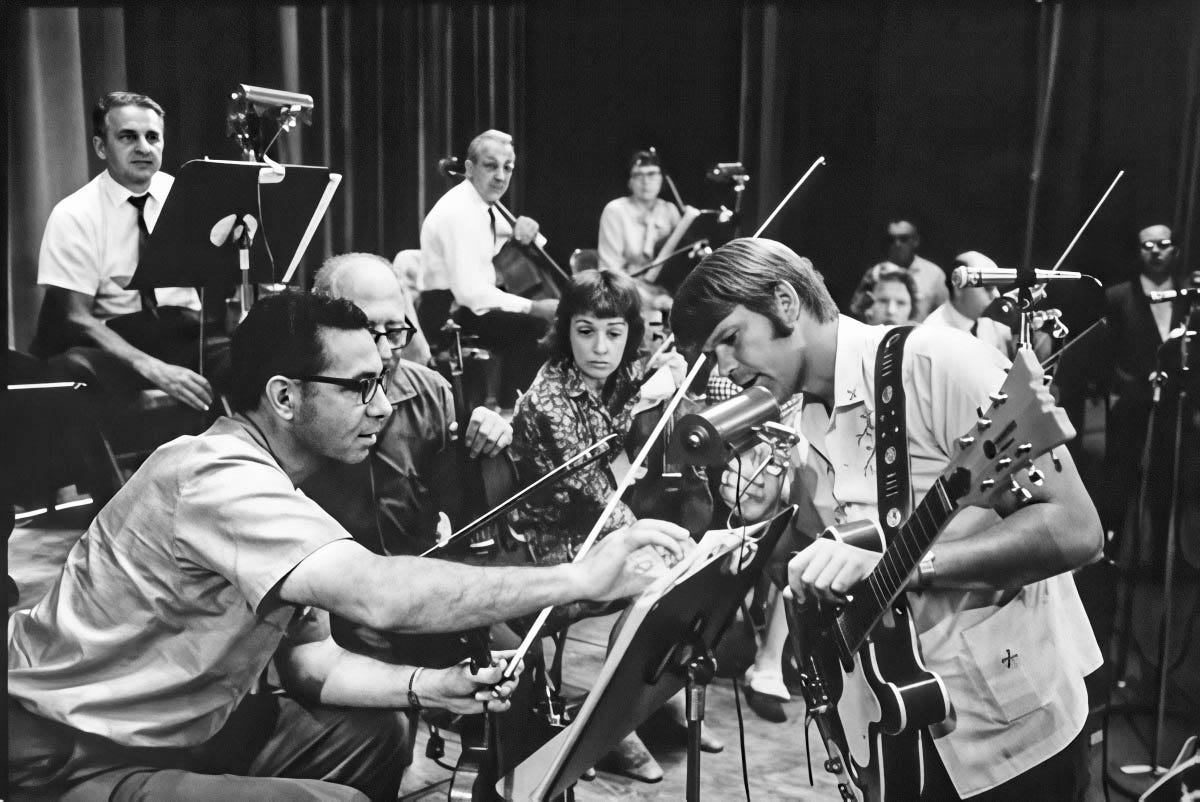
(Glenn Campell)
They worked fast—often multiple sessions a day—cutting tracks live, in mono, with little room for error. What set them apart wasn’t just technical mastery, but an uncanny ability to find the emotional center of a song almost instantly. Sometimes the magic came from intention, sometimes from accident—but always from listening.
In an era before celebrity musicianship became the norm, The Wrecking Crew were the quiet architects of a generation’s soundtrack. They didn’t chase recognition. They chased the groove—and in doing so, left behind a legacy that still echoes through the speakers today.
For filmmaker Denny Tedesco, that moment arrived with The Wrecking Crew, his deeply personal documentary chronicling the elite group of Los Angeles session musicians who quietly shaped the soundtrack of a generation.
Tedesco reflects not only on the long journey behind the project, but also on legacy, craft, and the enduring resonance of musicians who rarely took center stage.
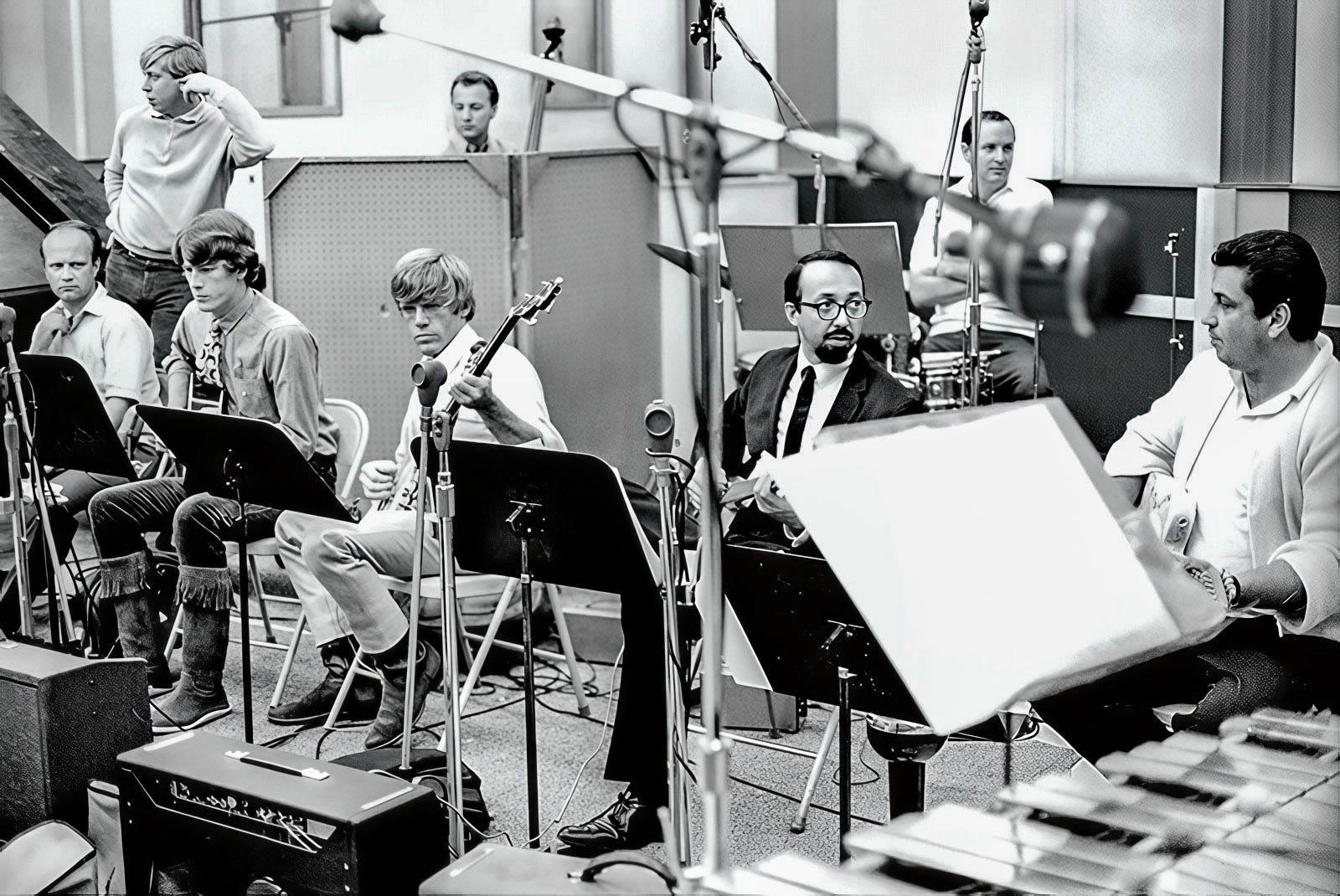
Bill King.: With documentaries like Sound City, Muscle Shoals, and 20 Feet from Stardom audiences are ready for these stories.
Denny Tedseco.: I totally agree. As difficult as the process was—and it was torture at times—the timing worked in our favor. If the film had come out even two years earlier, it wouldn’t be the same. We didn’t have certain footage yet—Leon Russell, newly discovered clips of Brian Wilson in the studio, sessions with The Mamas & the Papas, Jan and Dean. Those elements added so much depth.
And you’re right—those other films helped lay the groundwork. I started this long before Standing in the Shadows of Motown, and when that came out in 2002, I panicked. I thought, “They’ve already told this story.” But someone reminded me—there’s always another story.
B.K.: And yours is distinctly West Coast, a completely different ecosystem.
D.T.: Exactly. I actually avoided watching that film until I had a cut of mine finished. I didn’t want to be influenced—or intimidated. Their film is fantastic, but mine became something else entirely. It’s personal. It’s about my father. That gave me a way into the story that felt honest.
What emerges in The Wrecking Crew is not just a history lesson, but a tribute—particularly to Denny’s father, legendary guitarist Tommy Tedesco.
B.K.: The film feels like a love letter to your dad. I kept thinking about his playing on Fernwood Tonight—those wild, playful lines with “Happy” Kyne & the Mirth Makers.
D.T.: People who remember that show really remember it. I used to go see it live when I was in high school. My dad almost didn’t take that gig. He told them, “You’re always looking for some young kid—I’m not that guy.” And they said, “No, we need someone who looks like a truck driver from Cleveland.”
He loved it. He got to play, act, and become this character—Tommy Marinucci, just out of prison. And the smoking? That became part of the act. The fire marshal said no smoking, so Norman Lear wrote it into the script. Suddenly it was a prop. My dad was in heaven.
B.K.: What about his work on classic TV themes—Bonanza, MASH*, Batman?
D.T.: He did a lot of those. Not The Twilight Zone, though—that’s a common misconception. That theme came from a French recording. But yes—Bonanza, Batman, Green Acres, even that unmistakable wah-wah sound on Three’s Company. That was him.
For a young Denny, the studio world wasn’t immediately magical.
B.K.: Did you get to sit in on sessions as a kid?
D.T.: Rarely. Maybe on a school holiday—like Presidents’ Day—I’d tag along. Usually TV scoring sessions. As a kid, it was boring. Watching musicians play cues to picture didn’t exactly thrill me. Now, of course, I see the brilliance in it.
The mythology surrounding session musicians often includes images of union halls filled with players waiting for the call. Tedesco offers a different reality.
D.T.: That wasn’t their world. Sure, unions mattered—but when you had a hundred musicians on a session, you didn’t experiment. You hired people you trusted. If one person messed up, the entire session suffered—and that cost serious money.
My dad always said he was proud of the hits, but also aware that many others could have played those parts. But when someone like John Williams calls you months in advance and says, “Keep these weeks open—I want you,” that’s when you know you’ve made it.
The “Wrecking Crew” itself was never a fixed lineup.
D.T.: That’s the thing—there was no official roster. Hal Blaine told the story best. The older generation thought these younger guys were going to “wreck” the business by playing rock and roll.
They were taking gigs others didn’t want—non-union sessions, demos, early rock dates. But then producers like Phil Spector and Brian Wilson started calling them. Suddenly, they were indispensable.
You had Hal Blaine, Earl Palmer, Jim Gordon on drums. Guitarists like my dad, Glen Campbell, Billy Strange, Bill Pittman. Pianists like Don Randi and Leon Russell. Maybe 15–20 core players—but really, it was fluid.
Editing the film proved to be one of the greatest challenges.
B.K.: How difficult was shaping all that material into a cohesive story?
D.T.: Brutal. When we started cutting in 2006, I realized how crucial an editor is. Claire Scanlon was incredible—she took what was in my head and made it work.
Our first cut was two and a half hours. We couldn’t imagine getting it shorter. But if it didn’t serve the musicians, it had to go. Entire segments—like Jan and Dean—were cut. Painful, but necessary. That’s why DVDs exist, right?
Even after its initial release, the film continued evolving.
D.T.: Leon Russell was the missing piece for years. He kept saying no. Finally, in 2013, he agreed. I flew to Nashville not knowing what I’d get.
What I got was truth. That’s what all of them gave me—honesty. Leon talked about boredom, about playing the same track over and over and imagining his own vocals. That’s the reality of the work.
B.K.: Were they well compensated?
D.T.: Very. They were in demand—often paid double scale. My dad never complained about royalties or arrangements. He said, “I played on hundreds of hits and thousands of flops—I never gave the money back.”
For him, it was about doing the job right. “If the producer is smiling, I’m doing it right. If not, I adjust.”
What made these musicians exceptional was their ability to connect—to find the heartbeat of a song instantly.
D.T.: Glen Campbell once said, “We were like Michael Jordan.” You had to be that good. One-track recording, mono—no fixing things later. If you couldn’t keep up, you were gone.
They’d do three or four sessions a day, constantly adapting, listening, influencing each other. Today, with isolated tracking, that kind of chemistry is rare.
Licensing the music was another hurdle entirely.
D.T.: Over a hundred songs. People said it would never happen. But the labels were actually supportive—they gave us fair deals. The challenge was economics.
If the film cost $500,000 to make, distributors had to double that with marketing. It didn’t add up. So, we worked to bring costs down—essentially to zero—until Magnolia stepped in.
The story extends beyond film.
D.T.: There’s a book coming out, written by Ken Sharp. It’s a beautiful coffee table piece—photos, contracts, unheard stories. It really captures their voices.
Looking back, certain moments remain etched in Tedesco’s memory.
D.T.: The first day of shooting—the roundtable with my dad, Hal Blaine, Carol Kaye, Plas Johnson. I just let them talk. That was the foundation.
There are things I wish I’d captured—questions I didn’t ask. But some moments go beyond music. I asked them what happens when you’re at the top—and then you’re not.
Recording engineer Bones Howe said something I’ll never forget: “It’s not about staying at the top. It’s about taking the ride down slowly—and for as long as possible.”
That’s really what it’s about—being relevant. Not just as a musician, but as a person. We all want that. To keep going. To matter.
In The Wrecking Crew, Denny Tedesco ensures that the players who once stood just outside the spotlight are finally seen—and heard—with the clarity and respect they’ve always deserved.
Thanks do much
Thanks for that. Will do. My brother lived with the Ray Brown and Carol Kaye books.