


In 1998, there were eleven of us in that night class at Ryerson – nine women, two men, and a room thick with stories itching to be told but held hostage by years of polite silence. The course was under Eliza Clark, a novelist with the keen eyes of someone who could see right through you, past the deflections and detours, straight into the unresolved. She pressed us to write something true, something we meant. For most, that was the most excellent fiction of all.
I didn’t know I had The Rain Tree in me until I sat with the ghost of a ten-year-old summer and let the story unspool like a forgotten film reel. Madison, Indiana – humid, suspended in time – where even the air carried the echo of carousel music and old romance. That’s when she asked me the question.
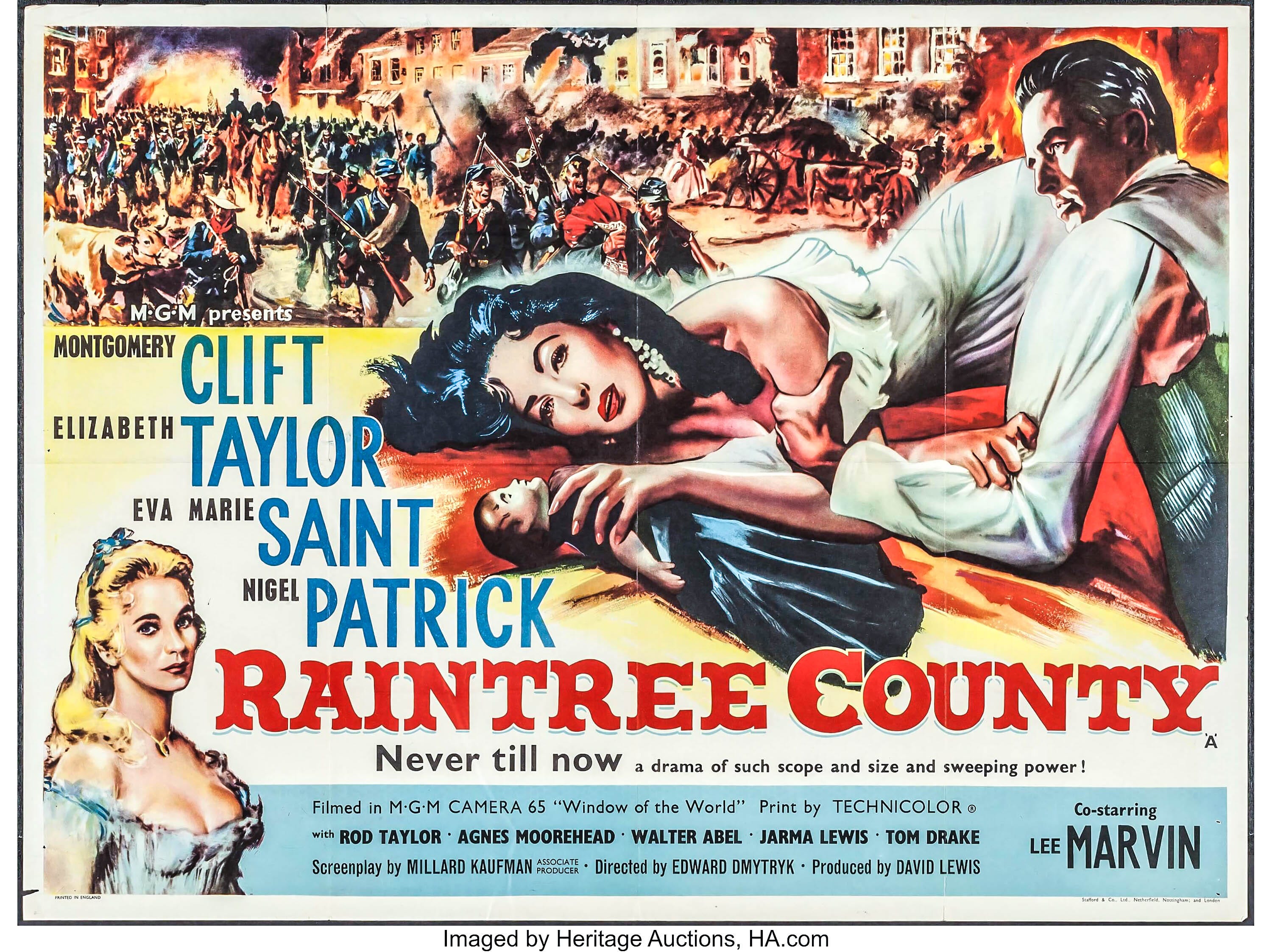
“Are you going to audition for Raintree County?”
She was the daughter of a soldier, posted to our quiet backwater for reasons no child ever questions. An army brat, sure, but not the loud kind – she had grace even then, in a way that disarmed boys who hadn't yet figured out what to do with their arms. There was a Ferris wheel scene being filmed, and she said she wanted to be in it. That word – wanted – was heavy with purpose. That was enough.
She was ten, I was ten, and every beat of that moment left a thumbprint on my heart. I watched her with the kind of focus that only comes when you haven’t yet learned to disguise your emotions. I wouldn’t have called it a crush back then. Back then, it was something holier – a reverence, a fascination, a story I didn’t know I’d spend a lifetime rewriting.
Decades later, I would shape that memory into a short story, The Rain Tree, and file it under "fiction" because that’s what we do when the truth feels too tender to expose. A friend – one of those Facebook whisperers who tracks the trail of childhood acquaintances like breadcrumbs – shared the story with her before she passed away. I hope she read it and knew it was always about her.
There’s a second memory that clings just as fiercely – Natalie Wood in Splendour in the Grass. She was everything a confused teenage heart could burn for – tragic, luminous, uncontainable. I remember thinking, this is what longing sounds like. I carried that feeling to the piano and let my fingers search for the right notes. That composition became my private score to the film – not just the film itself, but the ache it left behind.
You see, there’s a line between memory and music, and when you live long enough, you start to realize it’s the same line that runs between the pages of an old story and the heart of a ten-year-old boy watching a girl ask about a movie role – not knowing she’d become one.
That’s The Rain Tree. A story that began long before it was ever written.
The Rain Tree
When the news arrived that Amy Dickens had drowned—accidentally, they said—grief consumed every cell of my body. Amy was more than a childhood friend; she was the sacred keeper of my earliest dreams, the ten-year-old princess who lived in the inner sanctum of my soul, whose every breath I studied like scripture.
Life on my side of the block was a slow bleed of spirit; a mechanical process better suited for Fritz Lang’s Metropolis than a child's flowering. My parents’ house was silent and gray, the kind of place where feelings went to freeze. Amy was my one small fire.
My parents—Benjamin and Caroline—placed a firm moratorium on anything resembling affection. No school dances. No Saturday movies. Love, like caffeine or Chopin, was off-limits until college graduation. It was their holy decree, enforced by an evangelical fear that strangled emotion with a belt of righteousness.
That summer—1956—I had just turned ten. I avoided my father like I avoided cold baths. He worked shifts that erased him from our lives: three to eleven, eleven to seven, sometimes both.
When I knew he was locked away in his labours, I’d hop on my Schwinn and perch at the corner of Presbyterian and First. From there, I watched Amy on her daily walks into town. I rarely spoke. Shyness had me by the throat. As she passed, I imagined the scent of her skin, the warmth of her embrace, the satin fall of her raven-black hair.
Amy was an army brat—the daughter of Sergeant Major Ernest Dickens of Baton Rouge, Louisiana. They were stationed at Fort Knox, Kentucky. She and her mother lived in a square, pastel-shingled house shaded by tired maple trees, just drab enough to break your heart. Military families never had much say in aesthetics. They were renters in the American experiment—two years here, two years gone.
Fate sat her directly in front of me in fourth and fifth grade. Mr. Radner, a man who ran his classroom like a penal colony, arranged us alphabetically. That alphabetical accident let my imagination escape through the window behind Amy’s dark, gleaming hair.
Radner was always watching. Suspicious of joy. I didn’t mean to cross him, but I became his favourite target the day I brought a Parker fountain pen to class. One careless squeeze and a stream of blue ink arced through the air, staining Cheryl Martin’s Christmas dress, the one with tiny lightbulbs sewn into the seams. She cried; Radner raged. He gripped my arms and shook me like I might shed a confession. Cheryl, sweet soul, forgave me. Radner never did.
But Amy smiled. Just once. A small, precise smile that pulled me from the wreckage of shame.
I began sketching the curve of her hair with my pencil, tracing it like scripture, letting the lines fall into the inkwell. She let it hang across my desk like a dark curtain, shielding me from arithmetic and consequence. My fingers found it—her hair—thick and electric, and I was undone.
Then came the day that rewrote our lives. We were leaving school when Amy asked if I’d be an extra in Rain Tree County, Elizabeth Taylor’s new picture. I didn’t know what an extra was, but the way she said it made it feel like a sacred calling.
“They’re filming here. They need kids. Maybe we get to ride a Ferris wheel with Elizabeth Taylor.” Her accent had the soft tug of Louisiana summer.
The idea split my brain wide open. Amy and I, floating above our dull town, sharing a seat with Hollywood royalty. I didn’t care about Elizabeth Taylor. Amy had her eyes, sure—but my heart belonged to Natalie Wood. Splendor in the Grass wrecked me for good. But Amy... Amy was real.
We conspired to escape my father’s tyranny. Amy’s mother, the sainted Patrice Dickens, offered to take us. She worked Caroline over gently—like good southern women do—and Caroline, sensing something alive in me, intervened. Benjamin laid out a litany of chores and punishments. Caroline smoothed the path.
Then Hollywood abandoned us. The production moved to Danville, Kentucky. I feared telling my parents. That state line could have been the Iron Curtain. Again, Patrice worked her charms. She spun a yarn about cousins and curfews and respectable lodgings. Caroline leaned in. Benjamin brooded.
Rain Tree County’s production, as it turned out, was chaos. Montgomery Clift crashed his car. Rumours flew—sleeping pills, naked sprints through Danville, broken bones and burned fingers. It was a miracle we got near the set at all.
But we did. And there stood the Ferris wheel, towering and rusted and magnificent. We stuffed ourselves with popcorn and waited. A carnie asked why we were loitering. Amy spoke up, confident and clear.
“We came from Madison to ride the Ferris wheel with Elizabeth Taylor.”
The man paused, touched by her beauty. He turned to me, tousled my hair.
“You’re a lucky boy.”
He disappeared, returned, and just like that—we were in.
That entire day unfolded like scripture: Mrs. Dickens spinning in a hoop dress, Amy shining like a starlet, the crew swarming like bees. Dmytryk—the infamous director, one of the Hollywood Ten who named names—cast his sharp gaze our way.
“Are you here to fight for Robert E. Lee or to find the golden rain tree?”
I didn’t hesitate.
“I’m here for Amy.”
He laughed. The crew laughed. And with that, we were aboard the Ferris wheel.
Up we rose, above the chaos, above the plywood sets and movie stars. I sat beside the most beautiful girl I had ever seen. Amy talked, smiled, and laughed. I listened. My chest ached with joy. When she finally leaned into me and closed her eyes, I felt something pass between us—something pure and permanent.
She kissed me. Not like a child. Not like a girl playing house. But with a quiet grace that left me breathless. I said nothing. I held her. The camera rolled, the lights flashed, and the world disappeared.
Months passed. Amy drifted away—army life. Then one Saturday matinee, she returned and sat beside me in the darkened theatre for the premiere and delivered the final blow.
“They cut the Ferris wheel scene.”
And just like that, it was over.
She whispered as she left: "When I come back, we’ll find the rain tree for ourselves. Will you kiss me again?"
We never did.
She moved. She vanished.
Years passed. Life unfolded. But that kiss—those hours suspended in mid-air—remained untouched by time.
Now, with news of her death, the ache returns. I cry not just for Amy, but for that boy who believed the world could be rewritten with a single kiss. I cry for what we lost—what the reels never captured.
But I believe she found her rain tree.
And mine?
It still stands, fifty feet above the town square in Danville, Kentucky, where one summer night a boy and a girl defied the laws of gravity—and tasted something eternal.
Good stories are about small moments. The ones we fail to acknowledge. I keep a pad open and ready,
Forever us!