


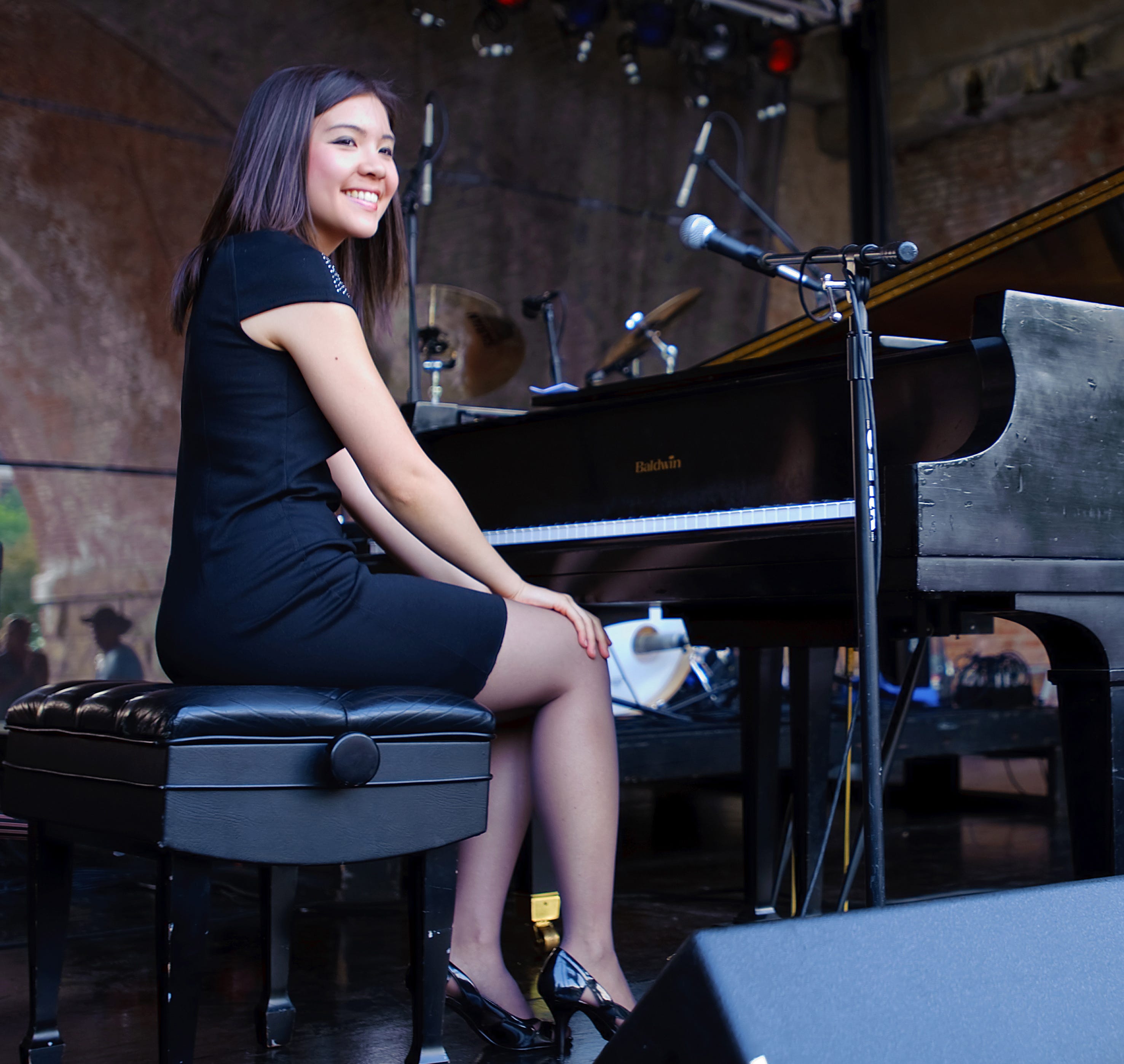
The parlour was filled with an electric anticipation, a hushed reverence that settled over the crowd like dust motes in a shaft of sunlight. At the grand piano, Stephanie Trick sat poised, her fingers dancing just above the keys, eyes closed as if listening to some distant echo of the past. And then, with a flick of the wrist and a sly smile, she plunged into a cascading opening run, and the room erupted in syncopated jubilation.
It all began, of course, with a syncopated rhythm that once caught fire in the parlours and saloons of late 19th-century America. Ragtime—born from the joyous collision of African American rhythms and European harmonies—became the defining sound of an era, its intricate left-hand patterns and cascading melodies evoking the bustling spirit of turn-of-the-century St. Louis and beyond. Stephanie knew this history well. It was in her bones, in the fabric of her playing. She carried the weight effortlessly, as if Joplin himself had whispered his secrets to her through the centuries.
Scott Joplin, the "King of Ragtime," had set the bar impossibly high with his 1899 classic Maple Leaf Rag, a piece so impeccably crafted it became the cornerstone of the genre. Joplin’s compositions—equal parts, technical precision and soulful elegance—defined ragtime as more than mere entertainment; it was artistry in motion. He had urged his listeners to play his pieces "not fast," a testament to his belief that ragtime was a refined art, not a novelty. Stephanie played them with the same deference, each note a tribute to the master, each phrase a conversation across time.
But ragtime didn’t stay frozen in time. It grew, evolved, and stretched its fingers into the smoky clubs and raucous rent parties of Harlem, where stride piano took hold. Stephanie knew this, too. She had studied the giants—James P. Johnson, whose Carolina Shout laid the foundation for stride; Fats Waller, who injected humour and warmth; and Willie "The Lion" Smith, who played with a bravado that resonated with jazz greats like Duke Ellington. Stride was more than notes on a page—it was swagger, personality, and an unwavering left-hand pulse that could move mountains.
Stride demanded a certain audacity, a willingness to take risks and let the music breathe. Stephanie had it in spades. Her fingers moved with the sly syncopation of Art Tatum, whose lightning-fast arpeggios blurred the line between classical virtuosity and jazz innovation. And like Eubie Blake, who straddled the ragtime and bebop years with effortless grace, she moved between eras with a natural ease, bridging the old with the new.
But what set Stephanie apart was something deeper—an almost spiritual connection to the music. She didn't just play stride; she lived it. Whether tearing through a blistering rendition of Johnson’s Charleston or caressing the delicate strains of Joplin’s Solace, she approached each piece with a reverence that transcended technique. Her performances were history lessons, love letters, and celebrations all rolled into one.
And then there was Paolo. Together with her husband, fellow pianist Paolo Alderighi, Stephanie explored the intersection of stride and swing, their duelling melodies intertwining like a well-rehearsed dance. On grand stages across Europe and in intimate venues stateside, they weaved contrapuntal wizardry that left audiences breathless. Their chemistry was palpable, their joy infectious. You could see it in the way they exchanged glances, in the way their hands found each other across the keyboard like old friends reunited.
In a world increasingly drawn to digital sounds and fleeting trends, Stephanie Trick stood as a living testament to the enduring power of syncopation and swing. She reminded her listeners—whether seasoned jazz aficionados or wide-eyed newcomers—that ragtime and stride were not relics of a bygone era, but living, breathing art forms, as vibrant and urgent as ever.
From Joplin’s parlour to Waller’s clubs, from Tatum’s concert halls to Trick’s global stage, the syncopated heartbeat of America’s great piano tradition marched on. And as Stephanie launched into yet another dazzling run, her hands a blur of motion and intent, it was clear—stride would live on, not just in the history books, but in the hearts of those lucky enough to hear it played by a true master.