


How do we talk about war without losing our humanity in the process? That seems to be the question beating beneath all of this. It is not simply about strategy, borders, or alliances. It is about whether we are still capable of moral clarity while the world burns.
This has been, as you say, a divisive conversation. On one side, and on both sides in truth, there is a stated desire to see peace in the Middle East and an end to the cycles of violence. Ordinary people want the killing to stop. They want space to grieve their dead and tend to their wounded. Yet the rhetoric that fills our airwaves, the slogans and the certainties shouted from podiums and screens, makes that proposition feel nearly impossible. The language of war crowds out the language of healing.
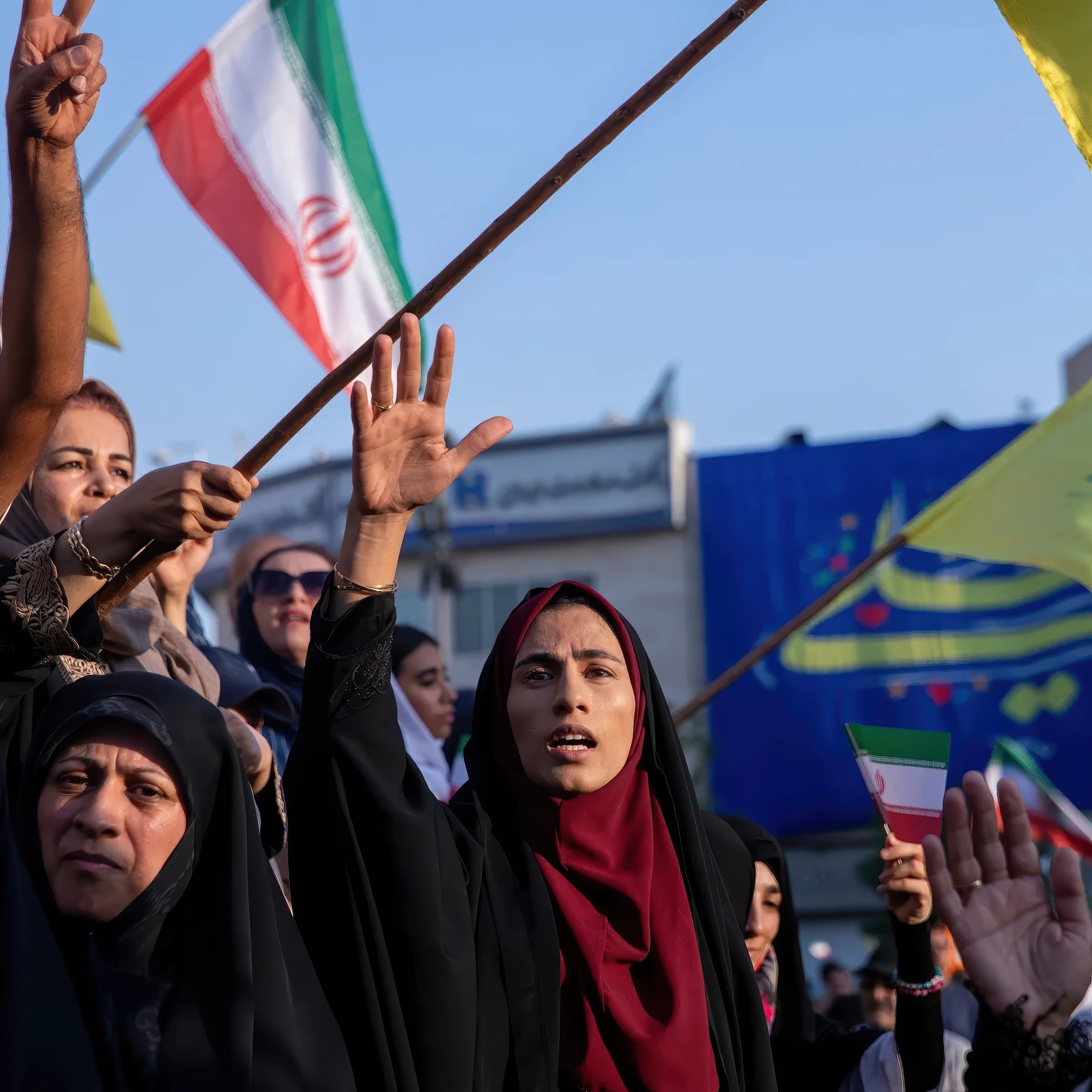
No one from this side of the world, nor from many other corners of it, looks at what happened to Iranian protesters and sees anything other than cruel repression and the slaughter of the innocent. We have seen this before. Myanmar stands as another testament to optimism crushed beneath the machinery of power. Hope can be extinguished by something as small and final as a spent bullet. Too many young people have been buried before their lives ever truly began.
And here we are again, staring into the abyss of another widening conflict, led by individuals who appear to possess no moral centre, no real aspiration for peace. They posture. They perform. They trade in half-truths and outright lies. When leadership becomes theatre, the consequences are paid in blood. This is where the conversation must take its monumental turn.
It is a fact often ignored in casual discourse that there is more than one Ayatollah. Iran is not a monolith but a complex society with layered power structures, including a military force numbering over a million. From Tehran’s vantage point, Israel and the United States are seen as provocateurs, and regional allies as legitimate targets. Whether one agrees with that assessment is beside the point; it is the perception that shapes policy and fuels retaliation.
Serious people are asking a sober question: what is the plan? Is the objective to end Iran’s nuclear capabilities? Is it regime change? Let us assume, for the sake of argument, that the first goal is achieved. How does one realistically bring about regime change in a nation where religion is not merely a private faith but an all-embracing bond that structures community, law, and identity? Removing a murderous spiritual leader is one matter. Understanding that millions adhere to religion for reasons of belonging, stability, and meaning is another. You cannot bomb a belief system into submission.
Some point to the Shah’s son, his image circulating as though history can be rewound. But Iranians remember the brutality of the former monarchy. That chapter did not close peacefully. Nostalgia is a thin foundation for nation-building.
Meanwhile, those prosecuting war elsewhere carry staggering moral weight. Nearly 49,000 Palestinian deaths. Every family that has lost a son or daughter carries within it a seed of grief that can so easily become a seed of vengeance. There has been no meaningful accountability. Gaza lies in ruins, its infrastructure shattered, its people facing starvation, disease, and displacement. How do we conduct policy debates while ignoring the epic suffering that war invariably brings? If we do not centre the human cost, we have already surrendered the argument to cynicism.
Then we pivot to Cuba, as though geopolitics were a board game and nations mere pieces to be moved. I, like many, want Cubans to be free from long-term dictatorship. Yet history complicates every tidy solution. Cubans remember the era of a rogue corporate mafia that siphoned wealth, starved opportunity, and entrenched corruption while ordinary citizens endured deprivation. Any conversation about freedom must also address that history.
There was a moment, under President Obama, when a different path seemed possible. Negotiation, back channels, incremental engagement. Money began to flow. Private property ownership expanded. Small businesses emerged. It was imperfect and fragile, but it was movement. Subsequent reversals, shaped in part by electoral calculations in Miami’s Cuban community, closed doors that had only just begun to open. We can pretend ideology drives these shifts, but money and votes speak loudly in Washington.
One cannot help but wonder: if the United States had fully ended the blockade, initiated sustained trade talks, and committed to sitting at the table without preconditions, might Cuba have evolved differently over time? Engagement is slow and unspectacular, but it often achieves what coercion cannot. An agenda rooted in punishment breeds resentment. An agenda rooted in mutual interest has at least a chance of producing reform.
Senator Mark Kelly’s question lingers: What is the plan? Will America commit troops on the ground? Military action without a clearly articulated, achievable political objective is not a strategy; it is improvisation with human lives.
And then there are the shadows that trail our leaders. The Epstein saga, the accusations that swirl around Donald Trump, including grievous allegations involving a fourteen-year-old. These are serious matters. Allegations of sexual abuse, particularly involving minors, demand sober investigation and due process. They cannot be weaponized casually, nor dismissed reflexively. If proven, such crimes are abhorrent. But in a nation governed by law, accusations must be tested in court, not adjudicated in the court of public rage.
War, scandal, repression, ambition — all of it converges into a single pressing inquiry: how do we speak about these things without surrendering either our moral compass or our commitment to truth? If we cannot hold complexity in our minds — if we reduce entire nations to caricatures and entire peoples to collateral damage — then we become participants in the very dehumanization we claim to oppose.
The plan, if there is to be one worthy of the name, must begin with an unflinching recognition of human suffering on all sides, a rejection of empty theatrics, and a renewed insistence that power be tethered to principle. Without that, we are not talking about peace. We are merely narrating the next war.
appreciate
Respect