


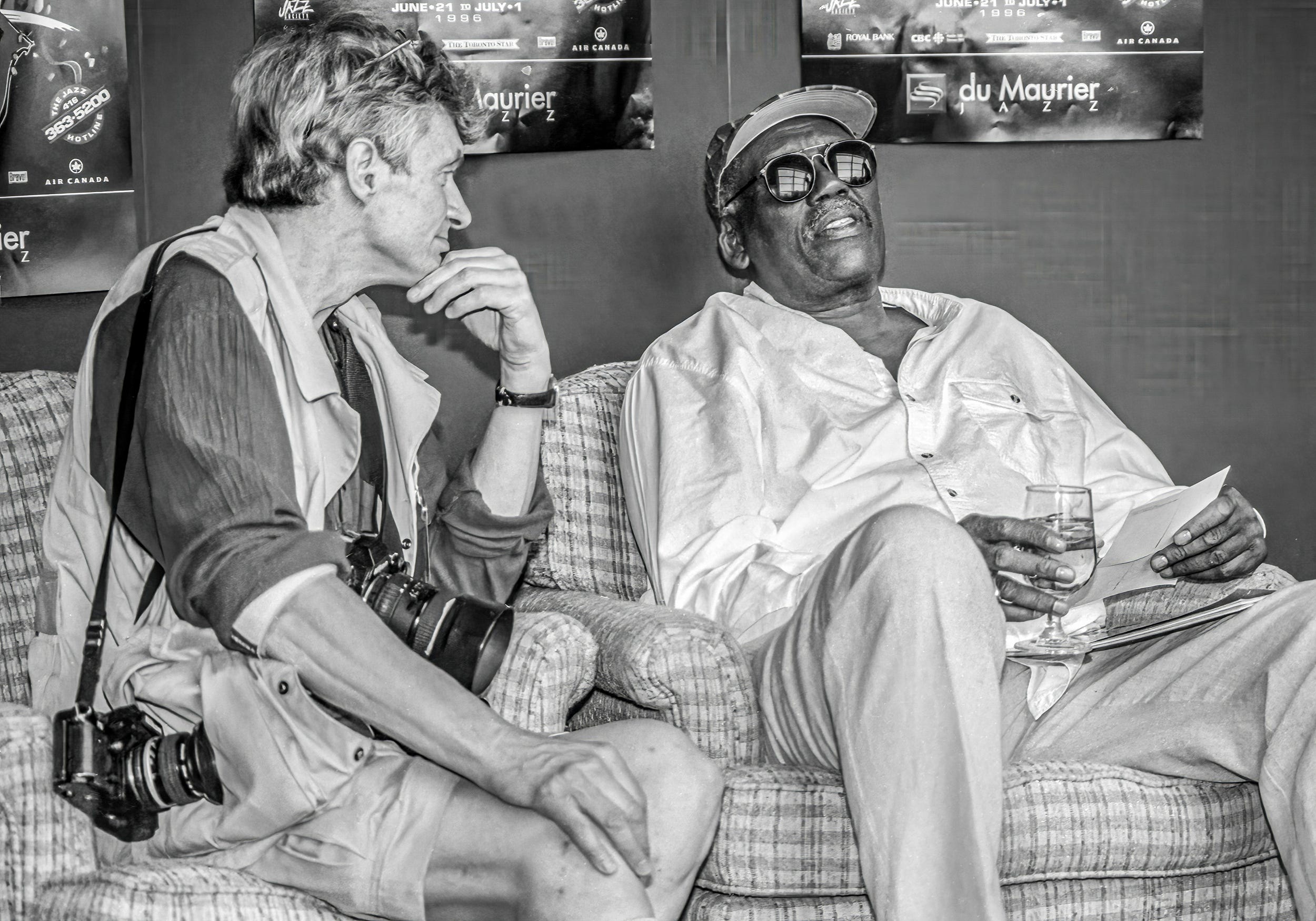
Paul Hoeffler and Randy Weston: Bill King Photography
The cameras sit idle, their lenses cold and unblinking, like the world outside. Beyond the window, the snow falls heavy and unrelenting, a white shroud draping the earth in silence. It’s the kind of snowfall that stirs memories; the kind that makes you dig through the basement for boots you haven’t worn in twenty years. Kristine reminds me, as she often does, that the last time she saw snow this deep was January 1999.
I was on a cruise ship in the Caribbean, playing music under a sun that felt worlds away from the frozen streets of Toronto, where Mel Lastman had called in the National Guard to dig the city out. I was skittering between islands, each one a paradise, while back home, the city was buried.
Kristine was a shut-in then, and I was battling the Norwalk virus—a nasty bug that left me weak and wretched. I remember calling her from Puerto Limón, Costa Rica, a port town that was equal parts beauty and danger. The interior was lush and breathtaking, but the town itself was a barhop for Colombian drug smugglers, their presence a shadow over the place. A local taxi driver once took me to a gator pit, pointing to the murky water and saying, “This is where the fuck-ups spend their last day.” I didn’t ask questions. Some stories are better left half-told.
But why photography? Why now, as the snow piles high and the cameras lay dormant? Because as much as I am obsessed with words, I am batshit insane about photography.
Rochester born, Paul Hoeffler mentored me, the best jazz photographer on this side of the border. An eccentric, prickly man who graduated from the Rochester Institute of Technology (RIT) and studied under Minor White. Paul’s work in the late fifties was sublime—his images of jazz greats were immortalized in Ken Burns’ Jazz and Verve Records’ box sets. He was a master of light and shadow, of capturing the soul of a moment.
Kristine and I followed Paul from one live concert to the next, watching him work and apply his craft. Paul took me to Hockley Valley, where I shivered like an abandoned deer while he framed a berry frozen in ice, shooting for an hour in waist-deep snow. I was impatient, eager to pop off a few shots and retreat to warmth. But Paul taught me patience. He taught me to see.
In his chaotic quarters, I spent hours sifting through prints, organizing his endless supply of 78s, and carting them to a dungeon-like room next to his darkroom. Upstairs, Hoeffler had hundreds of reel-to-reel bootleg recordings of jazz legends—Dizzy, Moe, Guido, Art, Duke. The weight of that history overwhelmed me. In his small workspace, I took charge of organizing orange-coloured photo paper boxes filled with prints and negatives. We talked for hours about dodging and burning, about lighting and moments. Paul narrated the stories behind the prints, the lives captured in black and white.
When my turn came, I’d pull out a print or two and ask, “Am I in the arena yet? Will I ever be a William Claxton, a Herman Leonard, a Hoeffler?” Paul would smile, his eyes knowing. Years later, I realized it was always about access. Being in the right place at the right time. Paul’s time was the golden age of jazz photography. The greats are gone now, but I caught the tail end, and I carry Paul’s words and prints with me.
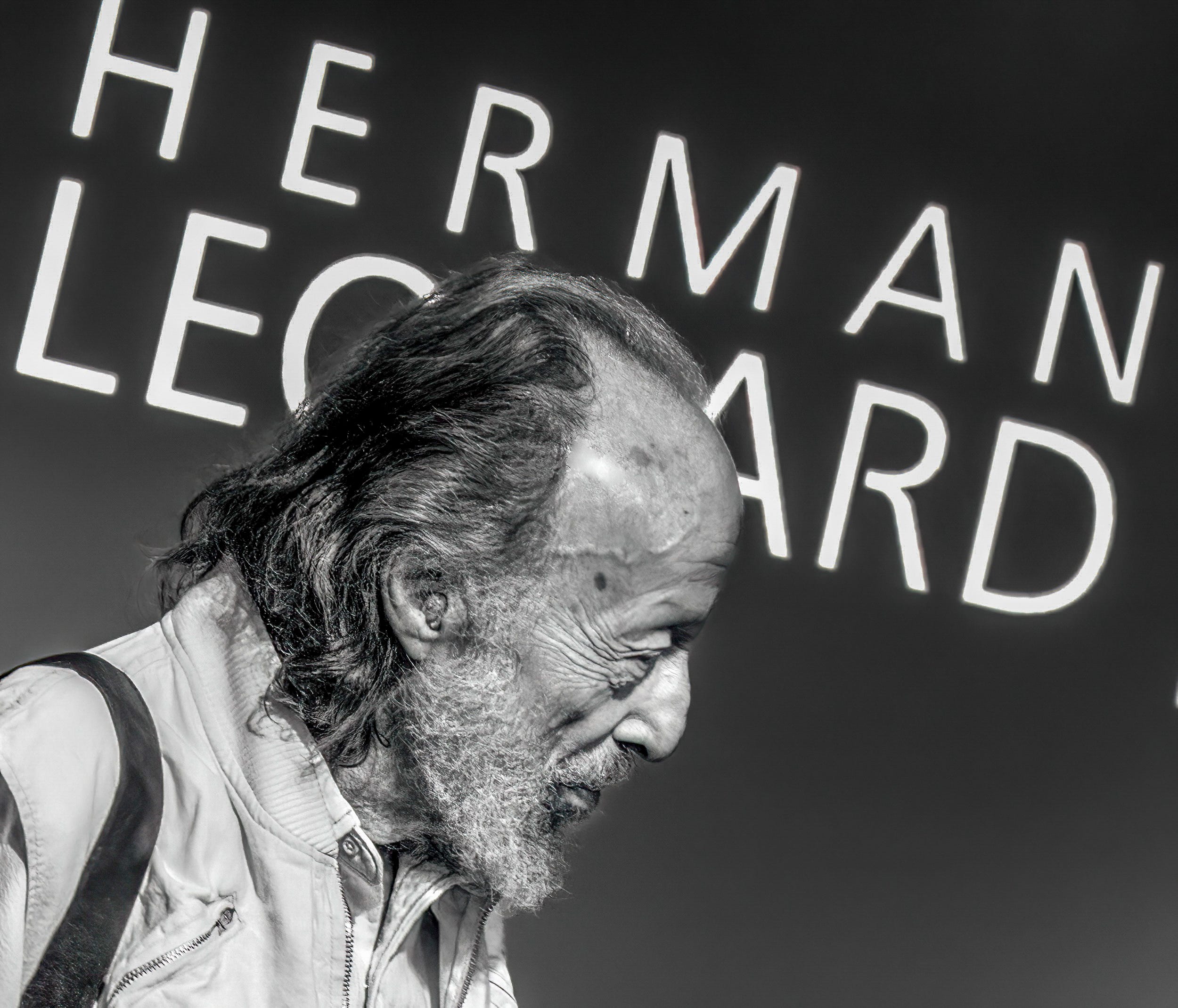
Herman Leonard - Bill King Photography
Kristine and I rode the easy-access train for thirty-five years, meeting legends of photography—John Abbott, Mark Miller, Patrick Harbron, Herman Leonard. I’ve since published three books of fine art photography; works I wish Paul could have seen. He died, likely from the chemicals that killed so many master printers in air-tight darkrooms. A tragic end for a man who lived for light.
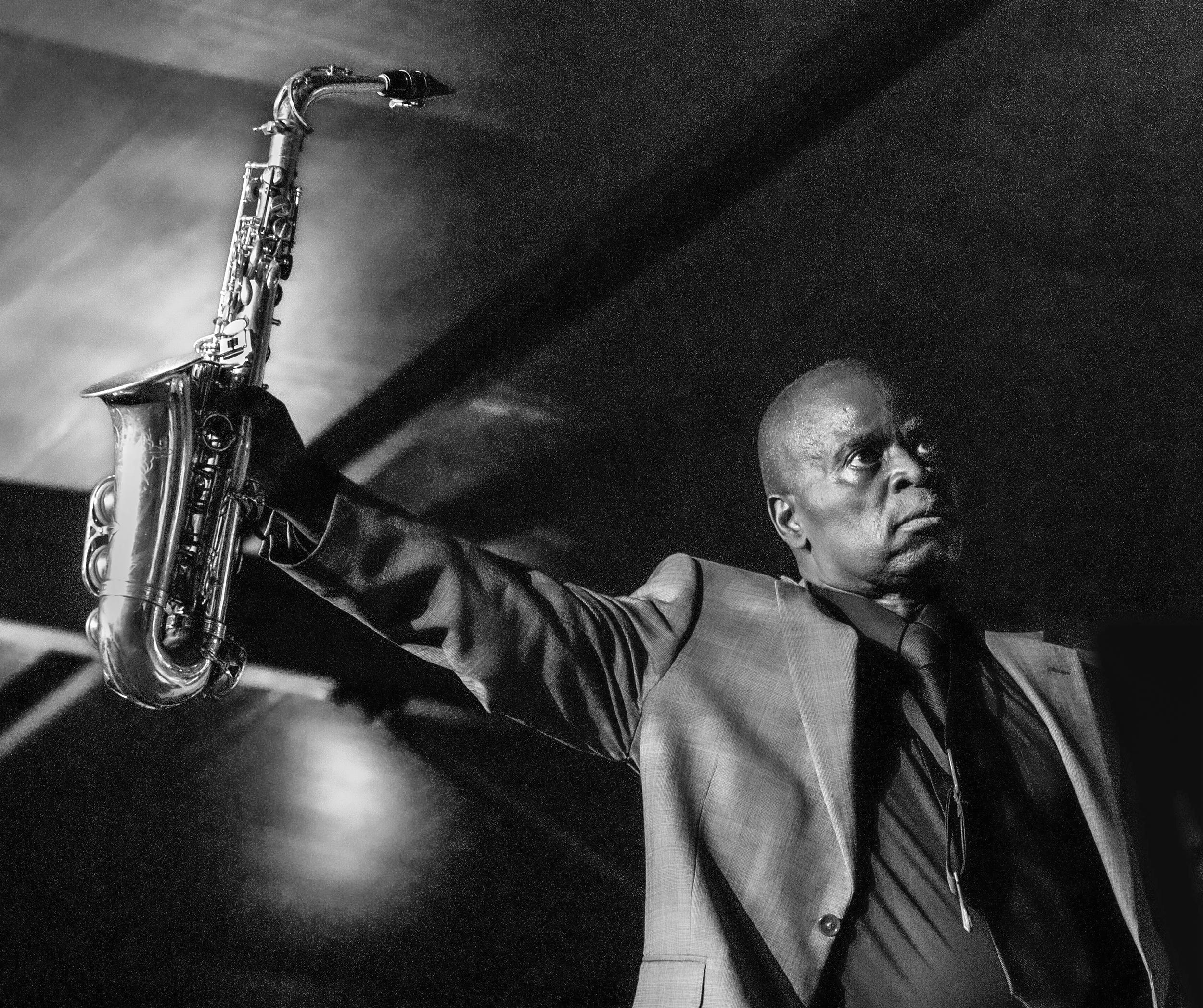
Maceo Parker: Bill King Photography
Today, as I sit here, the snow falling outside, I close my eyes and remember lifting that heavy lens, framing Aretha, Tony, Dave Brubeck, George Shearing, Wynton, McCoy, Herbie, B.B., Maceo, Buddy Guy, Elvin Jones. I recall the click of the shutter, the thrill of being up close, in the action. I still dream of being a street genius, like Saul Leiter or Ernst Haas. Kodachrome ecstasy. The cameras are ready, always ready. But today, fuck it, I’m playing the piano. The snow can wait. The world can wait.
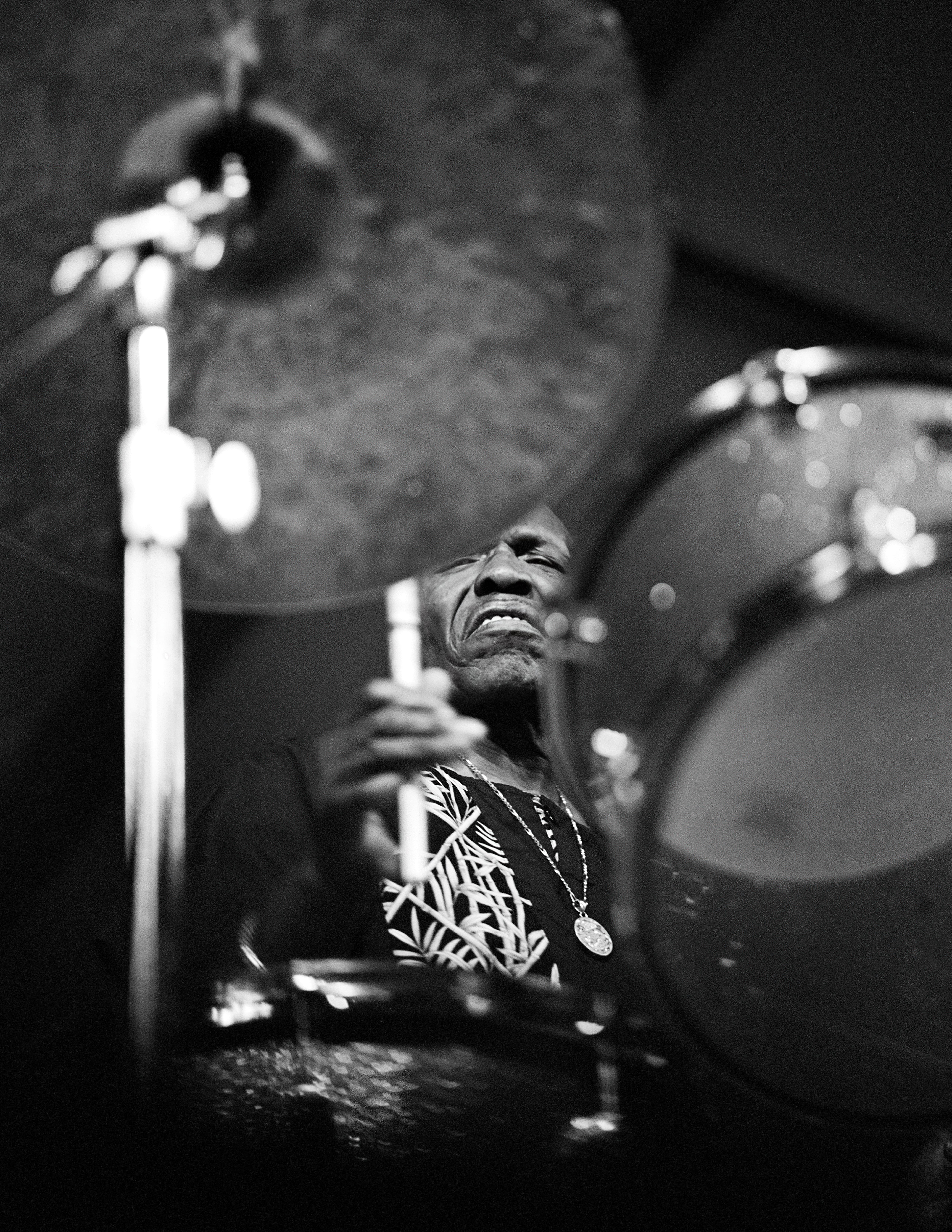
Elvin Jones: Bill King Photography
Sometime later, The Sound & Reason newsletter will evolve into a book—The Sound & Reason Volume #1. In its pages, I’ll include 64 Days at Sea – A Musician’s Log, sixty-four pages of notes scribbled at the end of each day between November 1998 and February 1999. I was then an absentee student, studying under the well-known Canadian writer Eliza Clark at Ryerson University. A two-year night student. A keener. Always chasing something. At sea, a man with two cameras - rolls of film, and time on my side.