


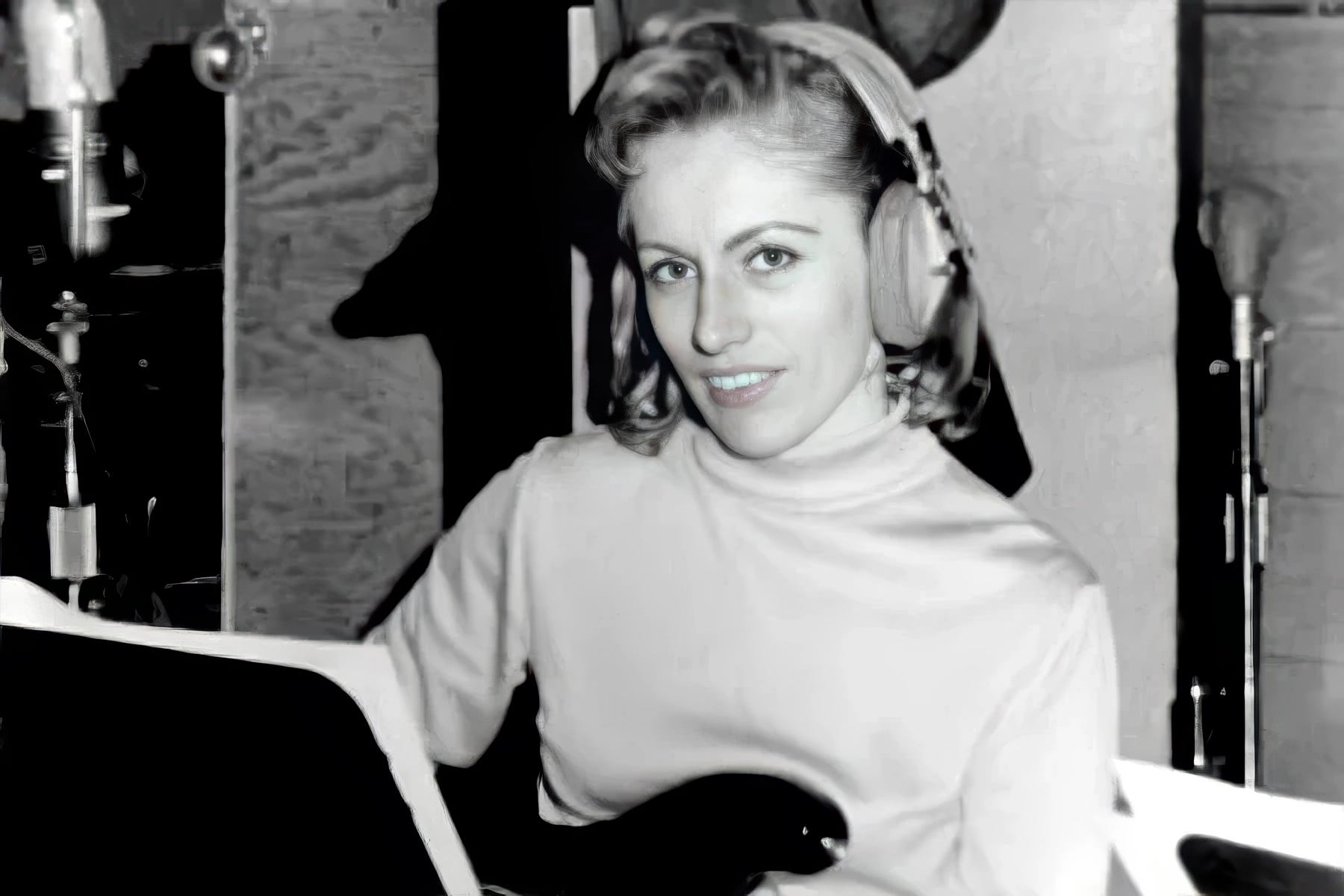
Before the slap, the pop, and the funk flash that came to define the bass guitar in pop music, there was a woman in slacks, high heels clicking into the Capitol lot, Fender Jazzmaster in hand, ready to cut history one take at a time. Her name was Carol Kaye. And long before the world knew her as the low-end architect of Pet Sounds, she was the right hand behind the groove, chopping chords like kindling and laying kindling for a fire that would burn through a thousand jukeboxes.
In a world stitched by men’s fingers on strings and egos on display, Kaye played her way into the middle of the table. Not through swagger, but precision. Patience. She earned her place the way all true greats do by knowing what not to play, by hitting the beat like a preacher hits the pulpit. Clean. Conviction first. Feel always.
Kaye came up on the guitar in smoke-filled Los Angeles jazz clubs—bebop brushing her fingers like silk and flint. She studied under Horace Hatchett, but she schooled herself in the religion of tone and time. By the time Ritchie Valens called for a session, she wasn’t green—she was glowing. Listen to “La Bamba.” That rhythm? That’s not just rhythm—it’s a backbone. It’s the unsung melody between melodies. The first clap before the dance starts.
Earlier, she laid down basslines that curled inside the drums like a lover. Kaye was the string that held the song together. Spector’s “Wall of Sound” didn’t stand without her hammering chords into the foundation. “Then He Kissed Me,” “Be My Baby,” “You’ve Lost That Lovin’ Feelin’”—those weren’t just hits. There were tectonic shifts in pop’s architecture, and Carol was laying brick with a Gibson or a Jazzmaster.
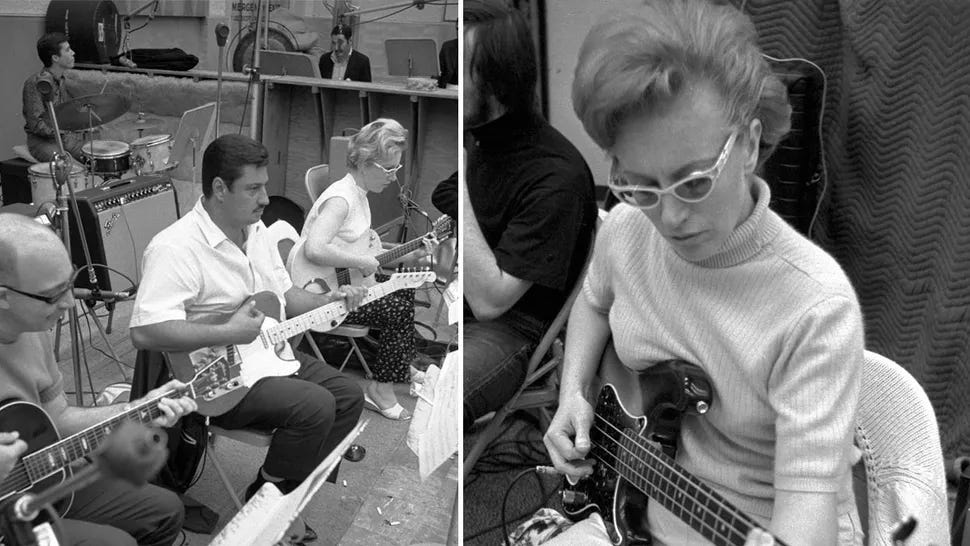
And then came the ask. One session in ’63, the bassist didn’t show. So Carol picked up the Fender Precision as if she were picking up a challenge and never put it down. The switch didn’t change the player; it revealed her truth. Because Kaye always understood something the others only pretended to know: the groove is a conversation, and the guitar and drums are its native tongue.
Still, it’s her guitar work that often gets lost beneath the halo of her bass legend. But that guitar era—that six-year stretch of smoking hot chords and finger-bleeding sessions—was sacred ground. It was the sound of America shifting from croon to grit, from torch songs to teen riots. Kaye didn’t just play on the records; she breathed into them. She was the steady pulse behind Shelley Fabares, the sweet sting in early Nancy Sinatra, and the propulsive fuel in Spector’s girl group engine.
She’d lock in with Hal Blaine like they shared the same nervous system. Glenn Campbell clowning in the booth. Leon Russell, half-stoned, half-genius, in the corner. All of them burning through reel after reel in the name of pop alchemy. And in that storm, Carol was calm, surgical, present. No ego, just ears.
TV came calling in the mid-60s, and Kaye answered with baritone guitar licks that dripped spy noir cool: Mission: Impossible, Batman, The Munsters. You didn’t see her. You didn’t know it was her. But you felt her. Always. Like smoke in the rafters.
By the ‘70s, the guitar calls slowed, and she turned to bass and teaching. A thousand students. A thousand more songs. But that early stretch—that guitar work—remains the unheralded prelude to a seismic career. Like Sister Rosetta before her, Kaye didn’t wait for permission to play. She showed up. Played her ass off. And rewrote the rules.
At 90, Carol Kaye stands alone. Not because she was the only woman in the room, but because she was the one everybody else listened to.
The truth is this: Carol didn’t need a spotlight. She had a pick, a pocket, and a pulse. And in a business that rarely let women do more than smile and sing, she brought steel and genius into the room—and left a legend on tape.
All across the universe.
They are far more interesting.